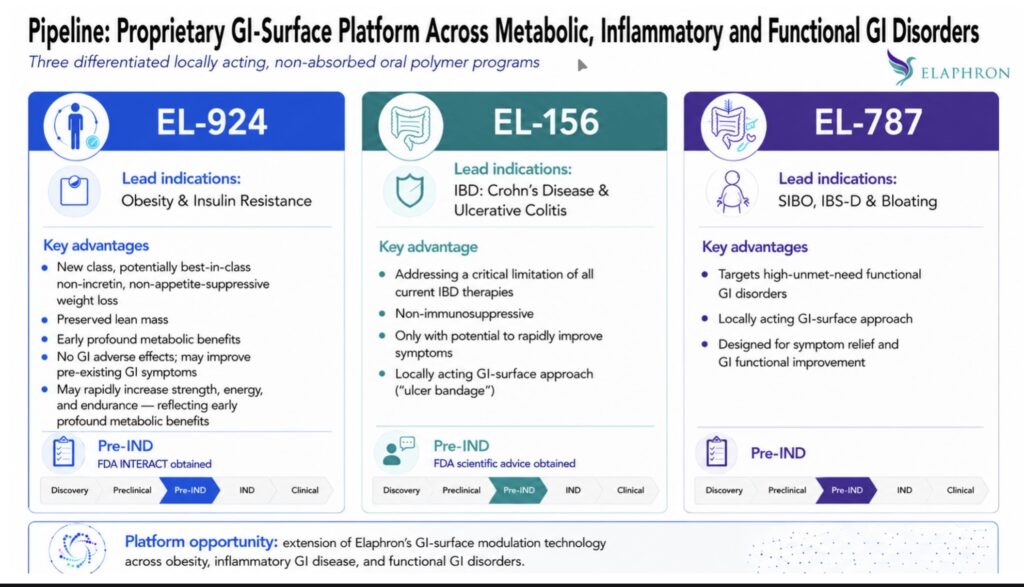
First-in-Class, Non-Systemic Therapies Designed to Address Limitations of Current Standards of Care
Program
Discovery
IND-enabling
Phase I
Phase II
EL-924
Obesity & metabolic disease
Program
Discovery
IND-enabling
Phase I
Phase II
EL-165
Inflammatory Bowel Disease (IBD)
Program
Discovery
IND-enabling
Phase I
Phase II
EL-787
Irritable Bowel Syndrome (IBS)&(SIBO)
Additional programs in metabolic disease are in early discovery. Updates will be shared as they progress.
EL-924
Redefining metabolic treatment in obesity.
EL-924 is a first-in-class therapeutic designed to address obesity through modulation of the body’s intrinsic metabolic regulation — moving beyond traditional approaches centered on calorie restriction or appetite suppression.
Potentially addressing key limitations of current standard-of-care therapies.
Differentiation
Designed to overcome the limitations of today's therapies.
Today's standard of care
Limitations of GLP-1 / GIP therapies
Lean mass loss associated with weight reduction
Gastrointestinal tolerability limitations in a substantial subset of patients
Poor long-term adherence
EL-924
Designed to overcome prior limitations
Robust observed biological effect
Early human data suggesting favorable tolerability
Early signals suggesting preservation of lean mass during weight loss
Profile
A non-systemic, mechanistically distinct therapy.
EL-924 is designed for local gastrointestinal activity with minimal systemic exposure — enabling a differentiated profile across safety, combinability, and breadth.
Differentiated safety profile
Local activity in the proximal small intestine with minimal systemic exposure.
Combinable with existing therapies
Mechanism complements — and is distinct from — current standard of care.
Broad applicability
Designed for obesity, insulin resistance, and related metabolic conditions.
Platform Extensions:
EL-156 in IBD and EL-787 in Functional GI Disorders
Insights from EL-924’s protective coating and local epithelial interaction helped inform the development of two additional gut-directed programs:
EL-156 for inflammatory bowel disease and EL-787 for functional GI disorders, including IBS-D, SIBO-like symptoms, and bloating.
EL-156:
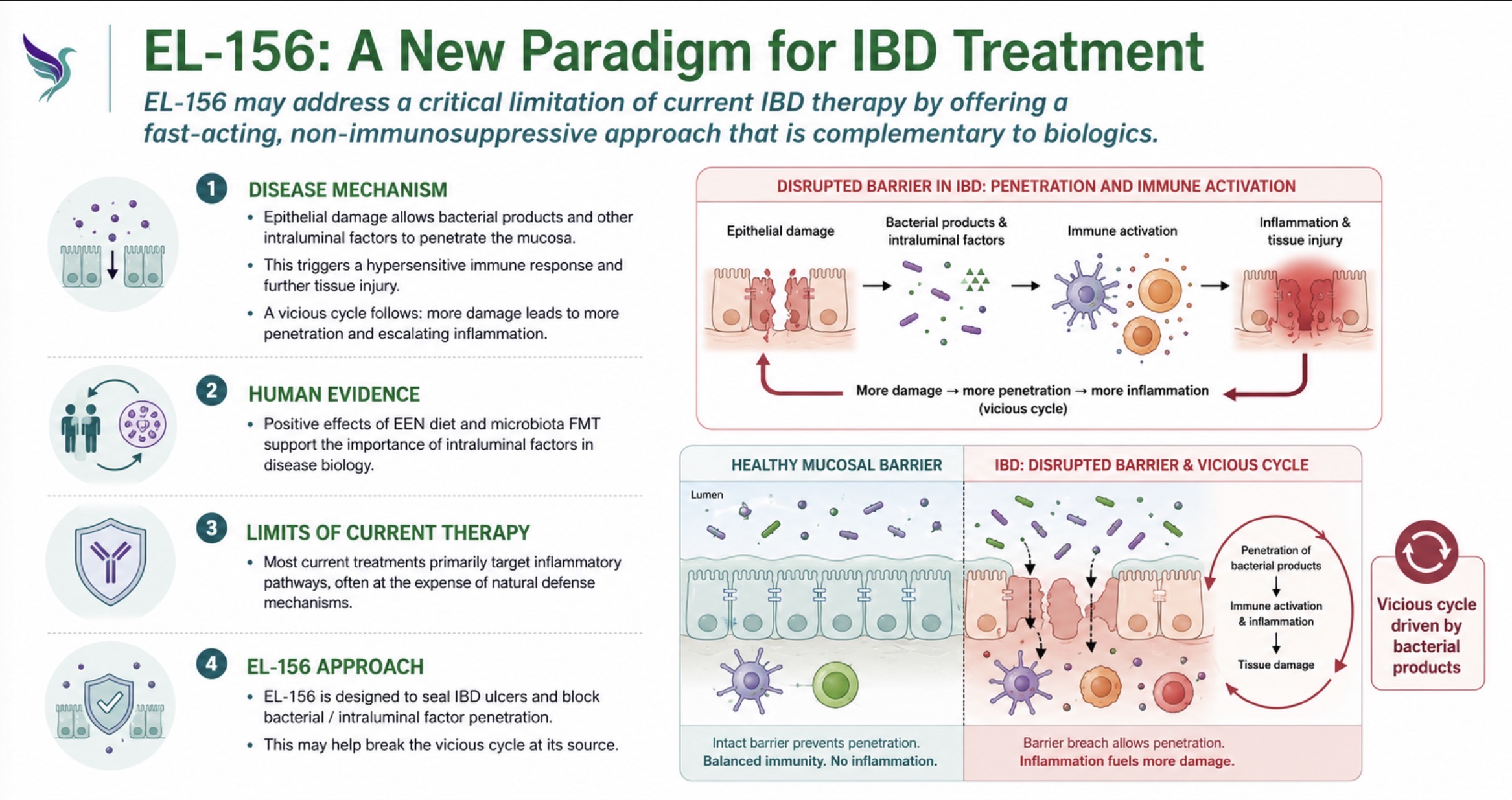
EL 156 Inflammatory Bowel Disease: Addressing Key Limitations of Current Therapies
Despite major advances in IBD treatment, there remains a need for therapies that provide rapid local control without systemic immunosuppression.
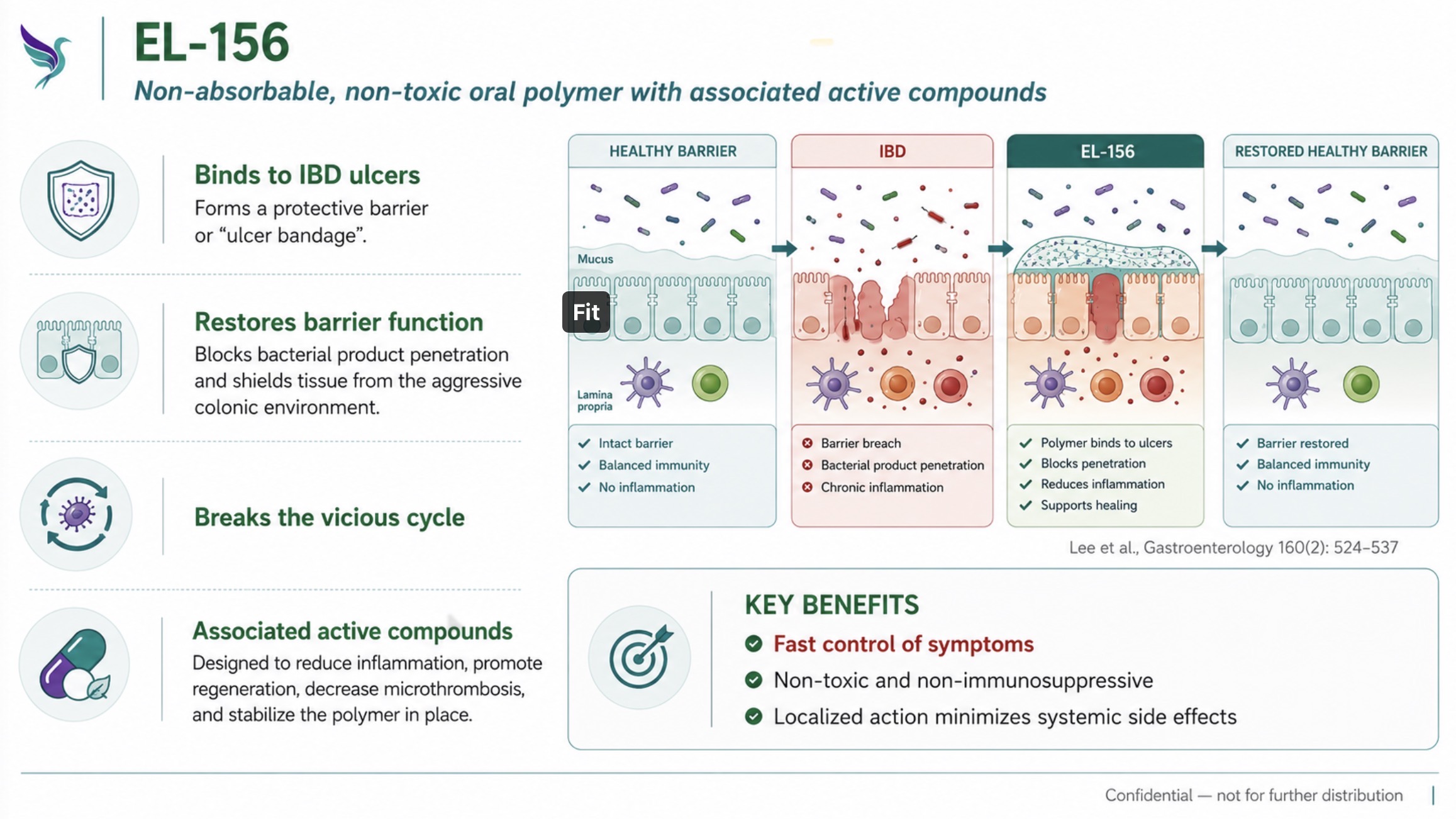
EL-615 is a gut-localized, non-immunosuppressive therapy designed to form a transient protective layer over inflamed and ulcerated intestinal tissue, shielding the epithelium from harmful luminal factors while supporting mucosal recovery.
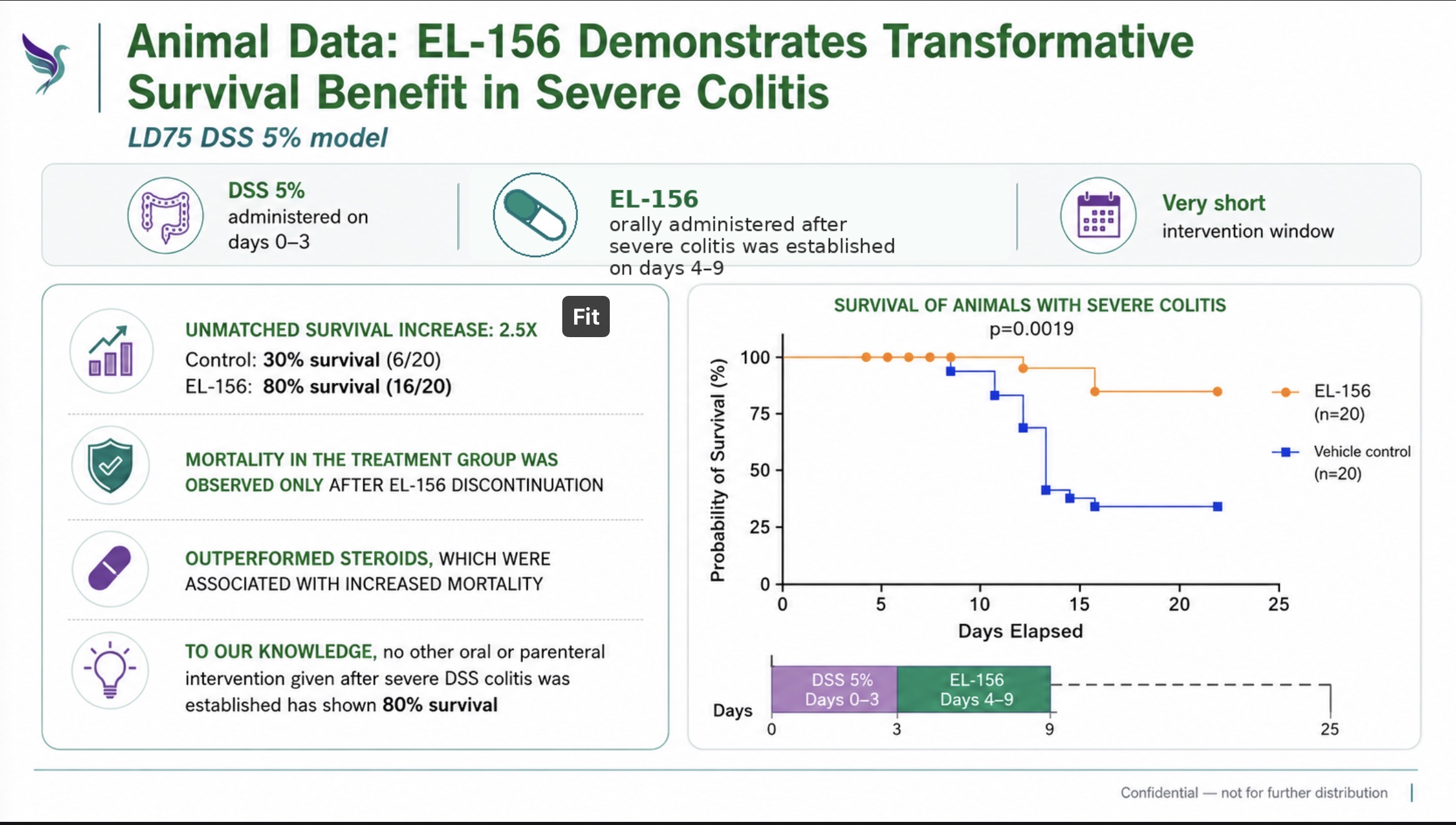
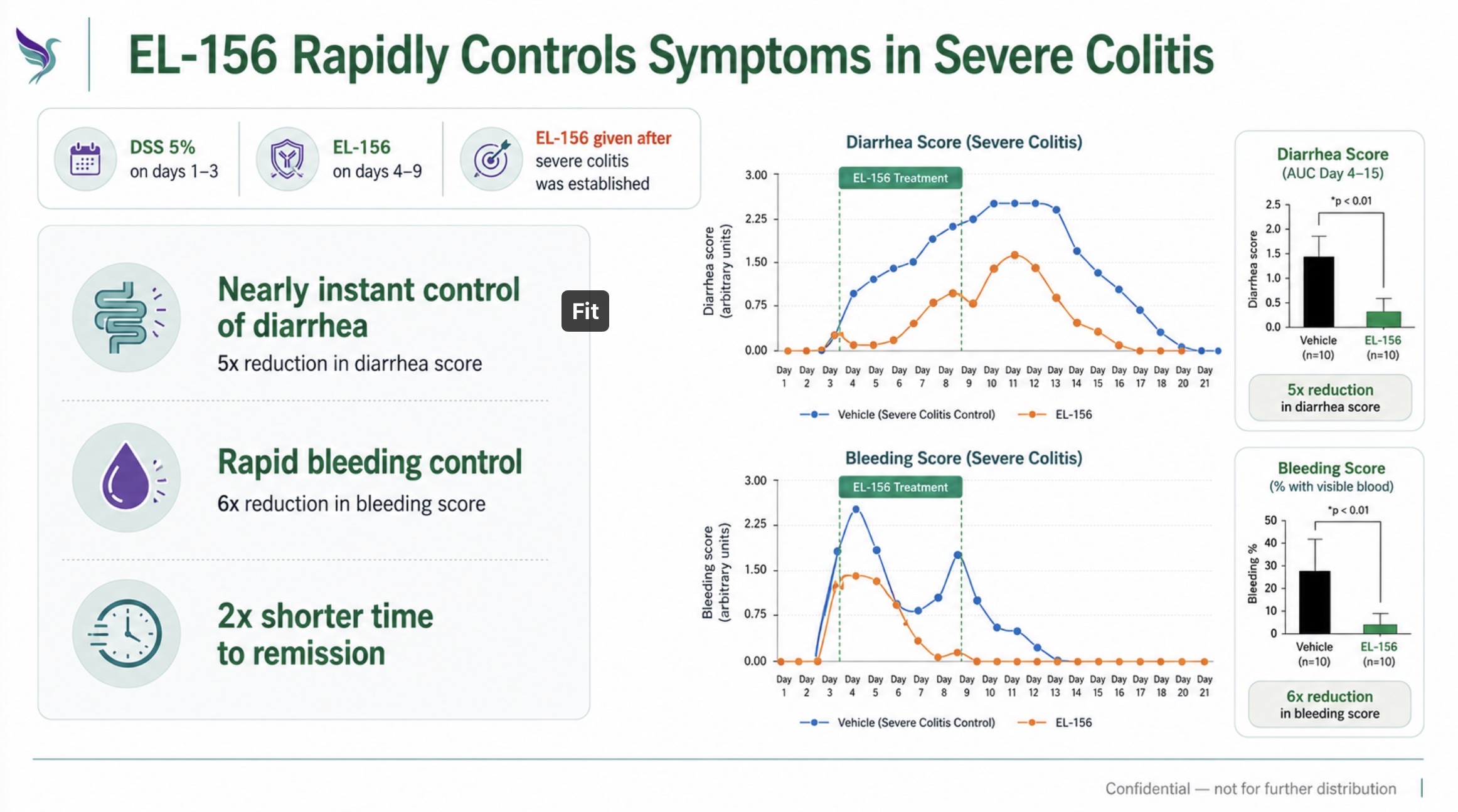
In preclinical colitis models, EL-615 rapidly reduced bleeding and diarrhea. In a severe established-disease model, treatment increased survival from approximately 30% to 80%.
These findings support the potential of EL-615 as a rapid, locally acting therapy for IBD, with a mechanism that may complement existing biologic and immunomodulatory treatments.
EL-787: Rapid Symptom Control for Bloating, SIBO-Like Symptoms, and IBS-D
Bloating is increasingly recognized as a major GI complaint in the United States, affecting a large proportion of adults and lacking highly effective treatment options.
EL-787 emerged from our work to optimize EL-924 tolerability and address potential GI effects associated with nutrient diversion, including bloating, SIBO-like symptoms, and diarrhea.
The resulting program showed encouraging potential to rapidly reduce pre-existing bloating, SIBO-like symptoms, and IBS-D–related discomfort in early human observations.
EL-787 is designed as a locally acting, potentially PRN oral therapy for common functional GI symptoms.
By providing transient protective mucosal coverage in harsh intraluminal conditions and modulating local microbiota-related interactions, EL-787 may deliver rapid and meaningful symptom relief while maintaining a favorable safety profile and promoting epithelial repair and improved defense mechanisms.